

The Rebel Who Rewrote Major Championship Golf
Before 1979, European golf occupied an uncomfortable position on the major championship stage. American players, led by figures such as Jack Nicklaus and Tom Watson, dominated the sport”s biggest events, combining power, disciplined course management and an imposing air of inevitability. European professionals were respected, but they were rarely regarded as the central figures in the story. The accepted route to success was largely straightforward: find fairways, hit greens, avoid unnecessary risk and allow superior ball-striking to wear down the field.
Severiano Ballesteros arrived at Royal Lytham and St Annes with little interest in following that script. The young Spaniard, who had turned professional in 1974, played with a mixture of imagination, aggression and instinct that seemed almost unsuited to conventional championship golf. His tee shots could stray, his lines could appear illogical and his recovery options often looked unavailable to everyone except him. Yet the official Seve Ballesteros profile records the career of a player whose influence reached far beyond a single tournament result.
The 1979 Open Championship was not an accidental victory produced by a fortunate bounce. It was a strategic masterclass in recovering from trouble, managing fear and treating the entire course as playable territory. Ballesteros demonstrated that a poor drive did not have to become a defensive surrender. For ordinary golfers, the lesson remains highly relevant: resilience is not simply the ability to accept a bad lie. It is the ability to assess that lie accurately, identify a realistic route forward and commit to the shot that gives the best chance of limiting damage or taking advantage.
Deconstructing the 16th Hole and the Car Park Shot
Ballesteros”s defining moment came during the final round on the 16th hole. He held a two-shot lead, but his driving had been unreliable throughout the week, and the blind tee shot presented a clear tactical question. A conservative club might have reduced the immediate danger, yet it could also have left a longer approach into one of Royal Lytham”s most demanding stretches. Ballesteros chose driver. The ball veered right, crossed the normal playing area and came to rest beneath a parked car in a temporary car park.
To describe the incident as luck is to miss the quality of the decision that followed. The car park had flattened the rough, and the rules allowed Ballesteros to take a free drop. That relief did not make the next shot simple. He still had to control distance, choose a landing area and deal with the pressure of a major championship lead. He pitched the ball to approximately 20 feet, then holed the birdie putt. The recovery effectively ended Hale Irwin”s challenge and established Ballesteros as the “Car Park Champion”, a nickname that captured the drama but not the full tactical intelligence of the moment. The official account of the shot shows how aggressively he created his own route around the course.
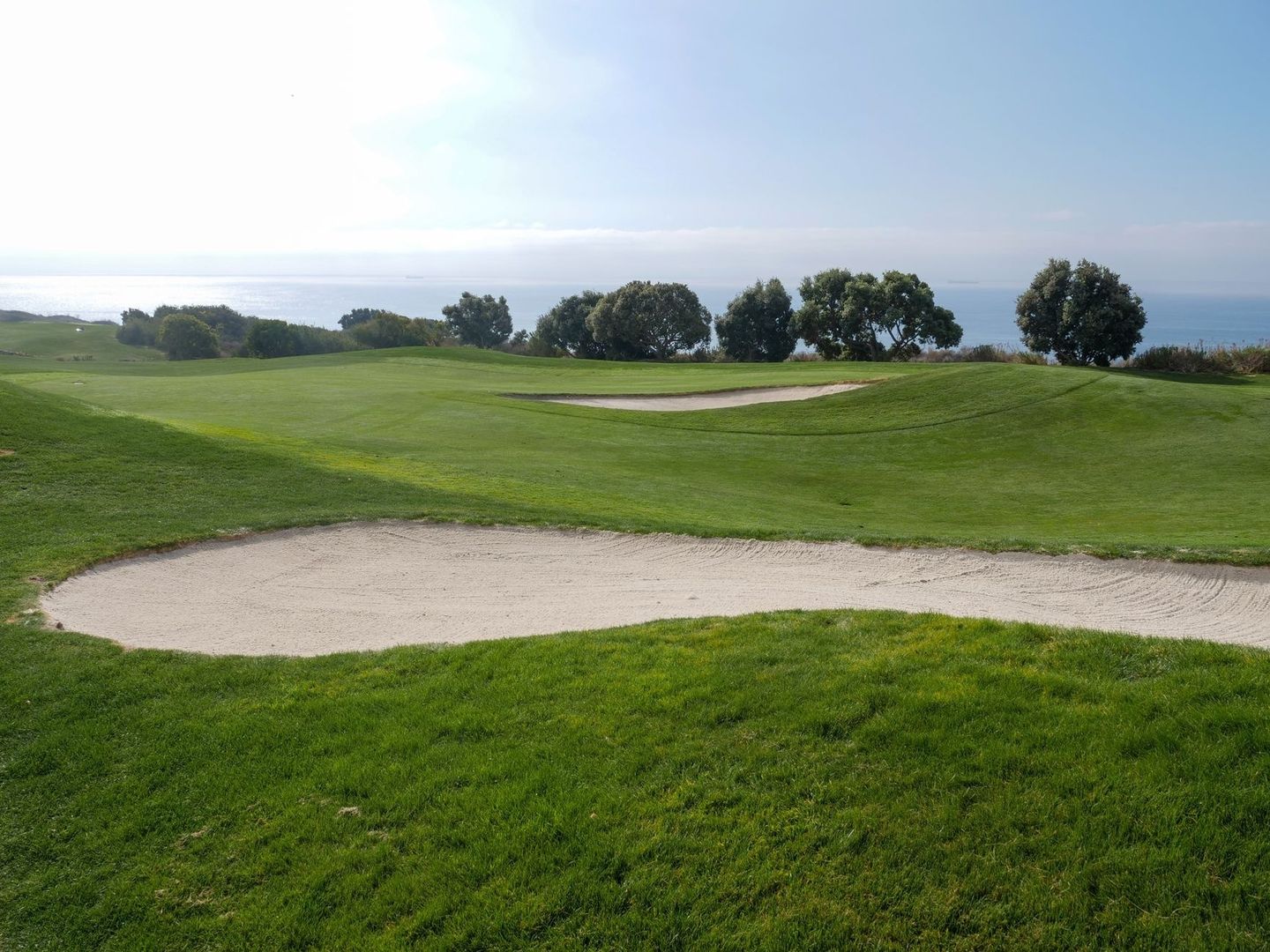
Ballesteros did not treat the fairway as the only legitimate area from which to attack. He examined the lie, the available relief and the target, then converted an apparent disaster into a birdie opportunity. That approach challenged the way players understood course architecture at Lytham. Fairway boundaries still mattered, but they were no longer absolute psychological barriers. A golfer who could control trajectory, landing angle and contact could sometimes use rough, flattened ground, paths or awkward lies as part of a different route to the hole.
- Pause before reacting: a wild drive is a situation to analyse, not an instruction to panic.
- Check the rules and surroundings: relief, flattened ground and openings may change the best option.
- Choose the highest-value route: the safest visible option is not always the safest way to protect a score.
- Separate decision quality from outcome: a committed, well-planned recovery can be correct even if it does not produce a birdie.
Conventional Course Management versus The Seve Way
Traditional course management is built around predictability. The player selects conservative targets, aims away from trouble and tries to make the next shot from a familiar lie. That remains sound advice for many holes, particularly when hazards are severe or the player lacks the technique required for a recovery. The Seve way was different in emphasis rather than simply reckless. It accepted that links golf often creates imperfect positions and that the best response may require an unconventional trajectory, a lower-lofted club or a landing area that sits outside the usual visual target.
Ballesteros”s short game made that approach credible. His basic chipping method was deliberately simple: use enough loft to reach the green, land the ball on a sensible surface and allow it to release towards the hole. As explained in this Seve chipping drill, he often compared the motion to a long underarm throw rather than a highly technical manipulation. The contrast with rigid ball-striking is clear. Mechanical precision seeks to remove variation; imaginative scrambling accepts variation, then manages it through touch, trajectory and clear visualisation.
| Traditional approach | The Seve approach |
|---|---|
| Prioritises fairways and greens | Prioritises the best available route to the hole |
| Avoids trouble wherever possible | Assesses whether trouble contains a playable option |
| Favours one standard trajectory | Uses low, high and running shots according to the lie |
| Relies heavily on repeatable contact | Combines contact with imagination and touch |
| Can become defensive after an error | Looks for a controlled chance to recover immediately |
This distinction matters particularly on links courses. Wind changes the effective distance, rough alters the strike and firm ground can send a ball far beyond the landing point. A rigid playbook built for calm conditions may collapse when the course no longer rewards a stock shot. Scrambling excellence therefore deserves more attention than a simple fairways-and-greens count. A player who can turn poor positions into bogey saves, par chances or occasional birdies may outperform someone who strikes the ball more cleanly but loses discipline after one wayward shot.
The Psychological Shift in European Golf and Ryder Cup Culture
Ballesteros”s first Open victory altered the emotional balance of professional golf. The significance was not only that a Spaniard had won a major. It was that he had done so while appearing to reject the assumption that American-style control was the only route to elite success. Nicklaus and Watson remained formidable, but European golfers could now see a player from their side of the Atlantic imposing his personality and tactical preferences on the most demanding stage.
That change became especially important in the Ryder Cup. Europe had traditionally entered the contest as the underdog, often suffering routine defeats against a deeper and more celebrated American team. Ballesteros brought a different expectation. He treated match play as a contest of nerve, presence and momentum rather than a polite exhibition of technical skill. His intensity could be controversial, and his career was not free from disputes. He missed the 1981 Ryder Cup after a disagreement over appearance money and his absence became a significant talking point. Yet his eventual return and growing leadership role demonstrated how central he had become to Europe”s competitive identity.
The later European renaissance was built by many players, but Ballesteros supplied its emotional template. José María Olazábal became his closest Ryder Cup partner and carried forward the same belief that difficult circumstances could be turned into opportunities. Later European contenders inherited the confidence to challenge American stars rather than merely admire them. Ballesteros”s influence was not limited to technique. It was a refusal to accept that an impossible lie had to produce an impossible result.
- Confidence became contagious: one European major champion gave others permission to expect success.
- Creativity became a competitive asset: unusual shots were no longer signs of poor discipline when properly assessed.
- Match play gained emotional force: momentum, body language and resilience became part of the tactical contest.
- Setbacks became temporary: a missed fairway or lost hole did not have to dictate the next decision.
Practical Recovery Lessons Every Golfer Can Apply Today
Most golfers will never face a major championship lead on the 16th hole, but every golfer will face a buried lie, an awkward stance or a blocked route to the green. The useful part of Ballesteros”s method is not copying his most spectacular shot. It is adopting the process that made those shots possible. Recovery should begin with information, not emotion, and the objective should be clear before the club is selected.
- Assess the lie honestly. Examine how much ball is visible, whether the ground is firm or soft, and whether the club can pass through cleanly. Do not plan the shot around the contact you hope to produce. Plan it around the contact the lie is likely to allow.
- Visualise the trajectory and landing window. Decide whether the ball needs to fly low beneath branches, climb over a bank or release across a firm green. Pick a specific landing area rather than aiming vaguely at the flag. Ballesteros”s genius was often his ability to see a route that other players did not recognise.
- Use a controlled soft-wrist release around uneven lies. For many basic chips, a narrow stance, modestly forward weight and a simple motion provide more reliability than trying to manufacture spin. Ballesteros often favoured minimal loft and allowed the ball to run. Around the green, a 9-iron may be a better choice than a lob wedge when there is ample putting surface available.
- Commit fully to contact. Once the decision is made, do not decelerate because the shot looks difficult. Aggression does not mean swinging violently. It means making a confident, purposeful stroke that matches the selected trajectory and landing point.
Practise these decisions from realistic lies rather than only from a flat practice mat. Drop balls into light rough, tight lies and sloping ground. Start with simple running chips, then add higher shots only when the lie and landing area demand them. The priority is not to reproduce Ballesteros”s flair on every attempt. It is to build a dependable recovery system that prevents one poor drive from becoming a disastrous hole.
Bring Seve Fearless Imagination to Your Next Round
Royal Lytham in 1979 remains a blueprint for embracing trouble without confusing bravery with recklessness. Ballesteros did not succeed because every aggressive decision worked. He succeeded because he saw possibilities where other players saw only punishment, and because his technique gave him several ways to advance the ball. The car park shot became famous because it combined risk, rule awareness, imagination and execution under extraordinary pressure.
Golf is ultimately an art of recovery as much as a pursuit of perfection. The next time a drive finds the rough, resist the instinct to label the hole a lost cause. Assess the lie, identify the landing window and choose one creative rescue shot to practise during the next range session. It might be a low-running chip with a 9-iron, a soft pitch beneath branches or a controlled punch from an uneven stance. The aim is simple: make the next decision better than the last one. That is the enduring lesson Seve Ballesteros brought from Royal Lytham to modern golf.